The smell arrives first. It drifts across the road at dusk, thick and sour, something between a skunk, a wet dog and a rotting swamp. Then, at the edge of the headlights, a tall shape covered in reddish-brown hair steps out of the saw grass, crosses the road on two legs, and is gone into the cypress.
That is how most stories of the skunk ape begin. Florida’s own Bigfoot has been reported from the Panhandle to the Keys for more than a century, and it has become as much a part of the state’s roadside culture as gator farms and airboat rides.
What Is the Skunk Ape?
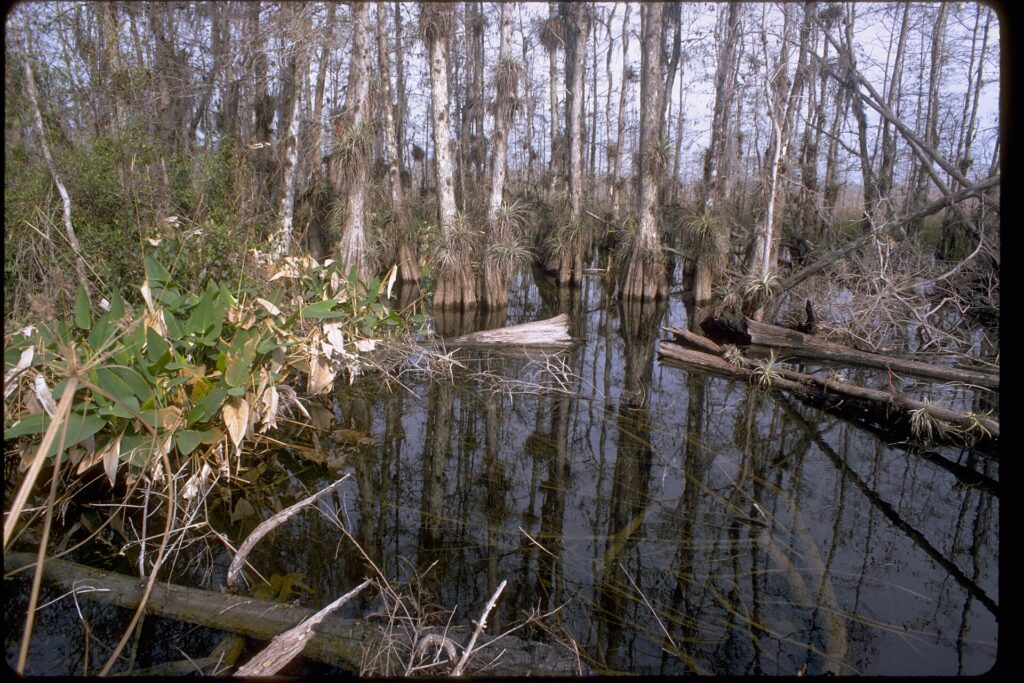

The skunk ape is a large, upright, ape-like creature said to live in the swamps and forests of the southeastern United States, above all in Florida. Witnesses usually describe it as between five and seven feet tall, often a little smaller and slimmer than the Bigfoot of the Pacific Northwest, with shaggy hair that ranges from dark brown to reddish.
What sets it apart from every other Bigfoot is the odor. Witnesses describe a stench so strong it can be smelled long before anything is seen, and it gave the creature its name. It is also called the swamp ape, the Florida Bigfoot, and in some cryptozoology writing a name said to come from Seminole and Miccosukee tradition, though that claim has never been confirmed.
A History of Sightings
Reports go back further than most people expect.
- 1818: Newspapers reported a “man-sized monkey” raiding food stores near what is now Apalachicola.
- 1929: Witnesses claimed an ape-like creature shook the Perky Bat Tower in the Florida Keys, scattering its bats.
- 1940s onward: Putnam County had its own local version, the “Bardin Booger,” still celebrated in song and at festivals.
- 1970s: A wave of sightings in Broward County included reports of livestock killings and a police officer who said he struck the creature with his car. Palm Beach County deputies reported shooting at one in a grove.
- 1997: Everglades tour operator Dave Shealy reported raided bait stands and strange tracks, and the Ochopee fire chief said he photographed a dark upright figure crossing the road.
- 2000: The Sarasota County Sheriff’s Office received an anonymous letter with two photographs of a hairy, ape-like creature standing in palmetto scrub. Known as the Myakka photographs, they remain the most famous skunk ape images.
Bigfoot research groups have collected hundreds of Florida reports since the 1950s, and in recent years sightings have come from most of the state’s counties.
The Skunk Ape in Florida Culture
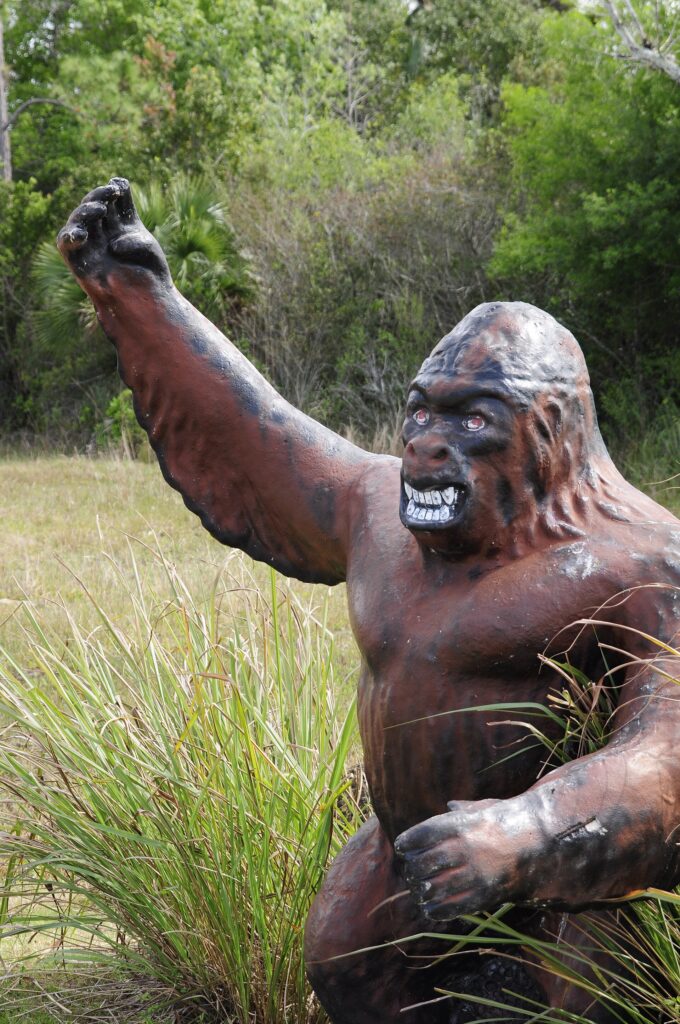

In 1977 a bill was introduced in the Florida legislature to make it illegal to “take, possess, harm or molest anthropoids or humanoid animals.” It failed, but it is still quoted as the moment the skunk ape entered state politics.
Today the creature is an unofficial mascot of wild Florida. Dave Shealy runs a roadside Skunk Ape Research Headquarters in Ochopee, on the Tamiami Trail through the Everglades. The skunk ape lends its name to festivals, trail races and craft markets. In 2010 a collector’s run of commemorative Skunk Ape coins was struck. During the COVID-19 pandemic, Orlando’s Gatorland even used the creature’s famous smell to remind visitors to keep their distance.
What Could It Be?
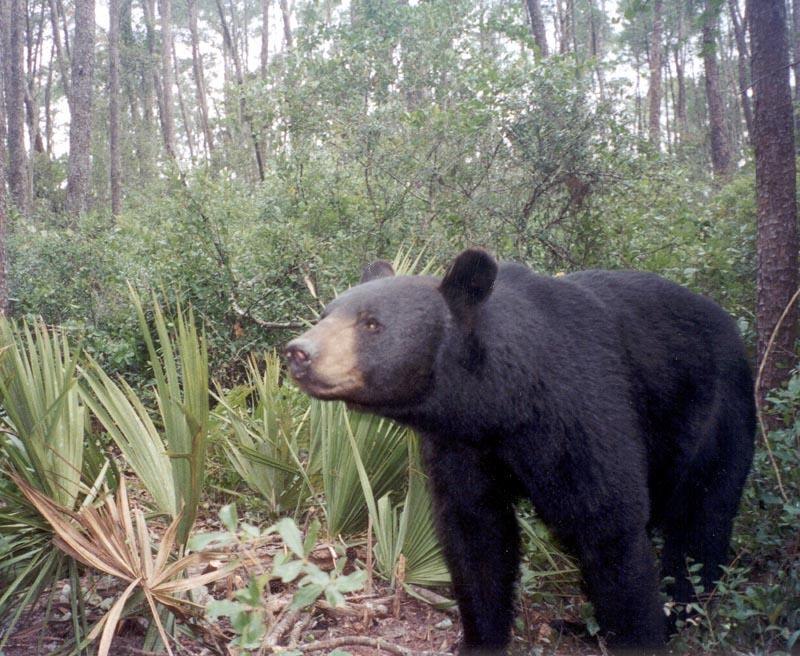

Mainstream scientists treat the skunk ape as folklore, and the National Park Service has called it a hoax. The most common explanation for genuine sightings is the Florida black bear, which can stand on its hind legs, and which looks especially strange when mange has stripped away patches of its fur. Others point to escaped or released captive apes, people in costume, and the plain difficulty of judging the size of anything seen for a moment in a swamp at dusk.
The smell has explanations too. Florida’s swamps are full of rotting vegetation, sulfur springs and dead animals, and a strong odor on a hot night needs no monster to account for it.
Why the Skunk Ape Endures
The Everglades are one of the last places in the eastern United States where a person can still be truly lost: mile after mile of saw grass, hammock and mangrove, much of it reachable only by boat. A place that wild needs a guardian in its stories, and Florida gave it one with a sense of humor. The skunk ape is half warning and half joke, a creature you are told to fear and then sold on a T-shirt, and that mix is exactly why people keep looking for it.
The Cryptids Deck is coming
Bigfoot, the Loch Ness Monster, Mothman, the Chupacabra and more, illustrated on a new deck of playing cards from Gent Supply Co. Expected around April 2027. Join the waitlist and we’ll email you when it launches.
By signing up you agree to receive emails from Gent Supply Co. about the Cryptids deck and our other playing card releases. We’ll send a confirmation email first. Unsubscribe at any time.
Recent Comments