A couple are driving home along the shore of a Highland loch. The water is flat and gray. Then something huge breaks the surface, rolls like a whale, and slides back under, leaving only a spreading ring of foam. They drive on, shaken, and tell no one but a friend who writes for the local paper.
That was April 1933, and the story that followed made Loch Ness the most famous lake on Earth. But Nessie is only one of many. From Scotland to Vermont to British Columbia, deep cold lakes have their monsters, and the stories about them follow a pattern old enough to predate the lakes’ tourist boards by centuries.
What Is a Lake Monster?
A lake monster is a large, unknown animal said to live in a body of fresh water. Descriptions vary, but most fall into two types: a long-necked creature with a small head and humped back, like a plesiosaur from a museum hall, or a long serpent that shows itself as a line of humps moving across the surface.
Most famous lake monsters share the same setting. The lake is deep, cold and dark, so nothing much can be seen below the surface. It is long and narrow, so wakes and waves travel strangely across it. And it sits in country where older stories already told of a spirit or beast in the water.
Famous Lake Monsters
Nessie (Loch Ness, Scotland)
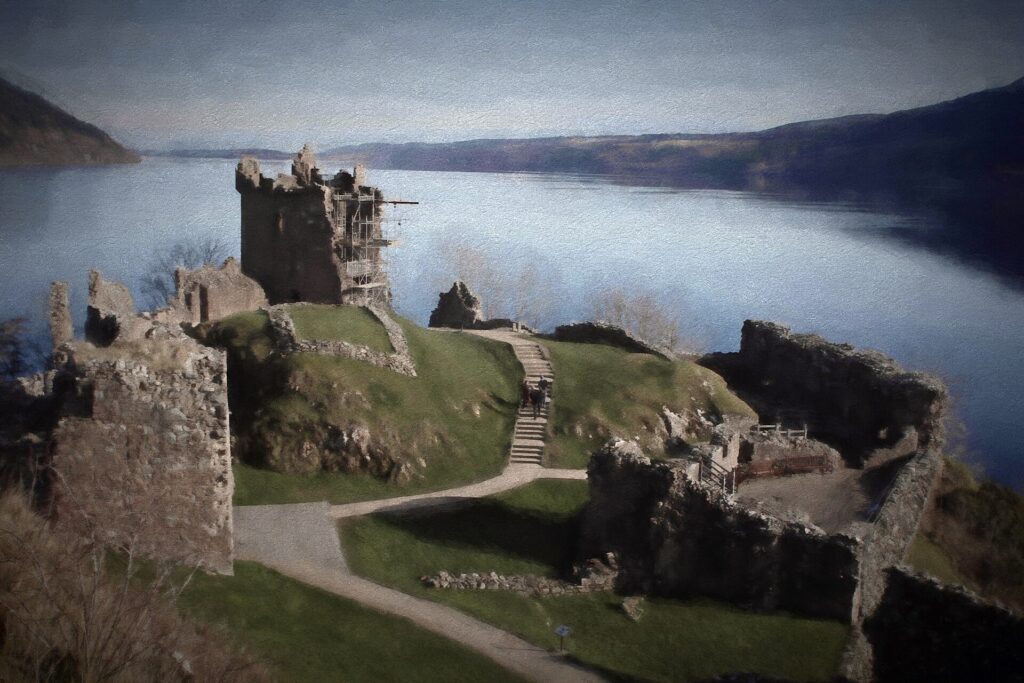

The oldest story attached to Loch Ness comes from Adomnán’s Life of St Columba, written in the seventh century. In it, the Irish monk meets people burying a man killed by a “water beast” in the River Ness, the river that drains the loch. When the beast rises again, Columba makes the sign of the cross and orders it away, and it flees.
The modern Nessie begins on April 15, 1933, when Aldie and John Mackay reported a whale-like creature rolling in the loch. Their account ran in the Inverness Courier on May 2, and a new road along the north shore soon brought crowds of watchers. A year later the Daily Mail published the “Surgeon’s Photograph,” a small head on a long neck, credited to a London doctor. It became the defining image of the monster until 1991, when Christian Spurling admitted it showed a toy submarine fitted with a head made of wood putty.
In 2018 a team led by Professor Neil Gemmell of the University of Otago sampled DNA from the loch’s water to catalog everything living there. The 2019 results found no reptile DNA at all, but a surprising amount from eels. A very large eel is now the most popular explanation among people who still believe something unusual lives in the loch.
Champ (Lake Champlain, United States and Canada)
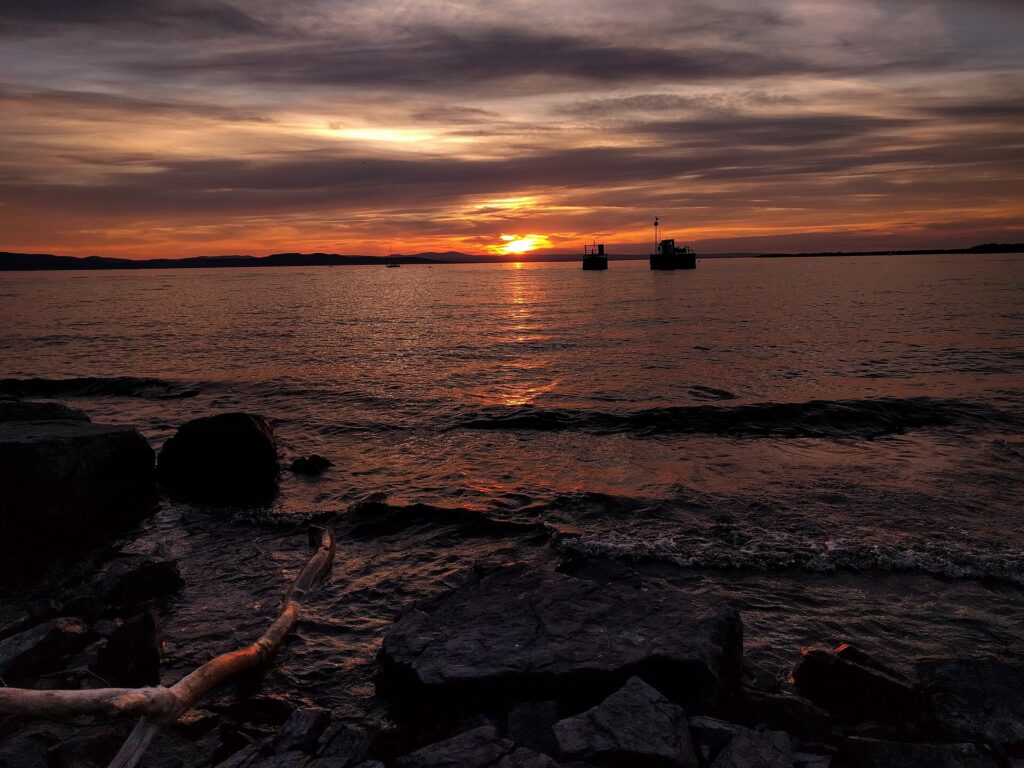

Lake Champlain runs for more than a hundred miles between New York and Vermont and into Quebec, and it has its own long-necked monster. Champ is often said to have been first seen by the explorer Samuel de Champlain in 1609, but that claim appears only in the 1970s, and Champlain’s own journals describe a large fish that was almost certainly a longnose gar.
The showman P. T. Barnum offered a reward for Champ’s hide in the 1870s and 1880s. The best-known image is a 1977 photograph by Sandra Mansi showing a dark head and neck rising from the water; with no negative and no exact location, it has never been confirmed. The village of Port Henry, New York, keeps a giant model of Champ and holds Champ Day on the first Saturday of every August.
Ogopogo (Okanagan Lake, British Columbia)

Long before settlers arrived, the Syilx (Okanagan) people told of n’ha-a-itk, a powerful spirit of Okanagan Lake. Westbank First Nation’s Pat Raphael describes it as a sacred spirit that protects the valley; early settlers recast it as a dangerous monster. The name Ogopogo, much less solemn, came from an English music-hall song in the early twentieth century.
Ogopogo has been filmed more than most lake monsters, usually as a row of dark humps. Skeptics point out that otters swimming in a line, beavers, and logs from the timber trade can all look like a serpent at a distance.
Minne (Minneapolis, Minnesota)
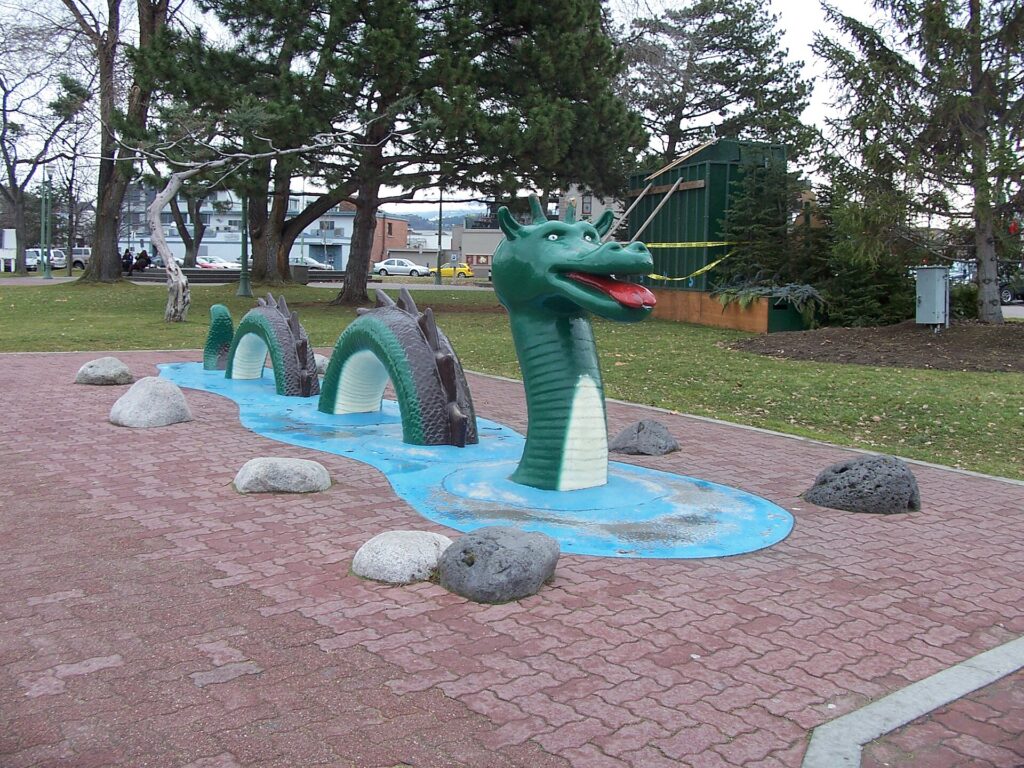
Not every lake monster is ancient. In the summer of 2009 a green, dragon-like head and humps appeared in Lake Harriet in Minneapolis. It was a sculpture by artist Cameron Gainer, floated with the Minneapolis Parks Foundation, and that September a public contest named it Minne. It moved between city lakes for several summers before the foundation returned it to the artist in 2018. Minne is proof that people love a lake monster even when they know exactly where it came from.
Others Around the World
Sweden has Storsjöodjuret in Lake Storsjön, protected for a time by local law. Norway has Selma in Lake Seljord. Lake Erie’s monster goes by Bessie, Lake Memphremagog on the Vermont-Quebec border has Memphré, and Lake Manitoba has Manipogo, named after its cousin in British Columbia. Japan’s Lake Ikeda has Issie.
Why Science Is Skeptical
The problems are much the same at every lake. A breeding population of large animals needs plenty of food, and cold northern lakes are poor in it. A plesiosaur would have to surface to breathe several times a day and would be seen constantly, not once a summer. Many of these lakes were scraped out or frozen solid during the last ice age, only about ten thousand years ago. And the water in them, while deep, has now been swept with sonar, cameras and DNA sampling without turning up a monster.
What does turn up is a list of things that fool the eye: boat wakes that cross long after the boat has passed, floating logs, swimming deer and otters, large fish, and waves from wind that never reaches the shore where the watcher stands.
Why Lake Monsters Endure
A lake is a closed world with a hidden floor. You can stand on the shore and see every inch of the surface, and still have no idea what is beneath it. Lake monsters live in that gap. Some began as sacred spirits, some as hoaxes, and some, like Minne, as art. They last because every lake that is deep enough and dark enough invites the same question, and no amount of sonar ever quite answers it.
The Cryptids Deck is coming
Bigfoot, the Loch Ness Monster, Mothman, the Chupacabra and more, illustrated on a new deck of playing cards from Gent Supply Co. Expected around April 2027. Join the waitlist and we’ll email you when it launches.
By signing up you agree to receive emails from Gent Supply Co. about the Cryptids deck and our other playing card releases. We’ll send a confirmation email first. Unsubscribe at any time.
Recent Comments