Two men on horseback round a bend in a dry creek bed in the mountains of Northern California. On the far bank, something tall, dark and covered in hair is walking away from them. One man’s horse rears. He grabs a rented movie camera, jumps down and starts running, filming as he goes. The figure keeps walking, turns its head to look straight back at him, and disappears into the trees.
That was October 20, 1967, and the roughly one minute of film Roger Patterson shot that afternoon has been argued over ever since. For nearly sixty years it has been the single most important piece of evidence for Bigfoot, and this fall a new documentary claims to have finally settled it.
What the Film Shows
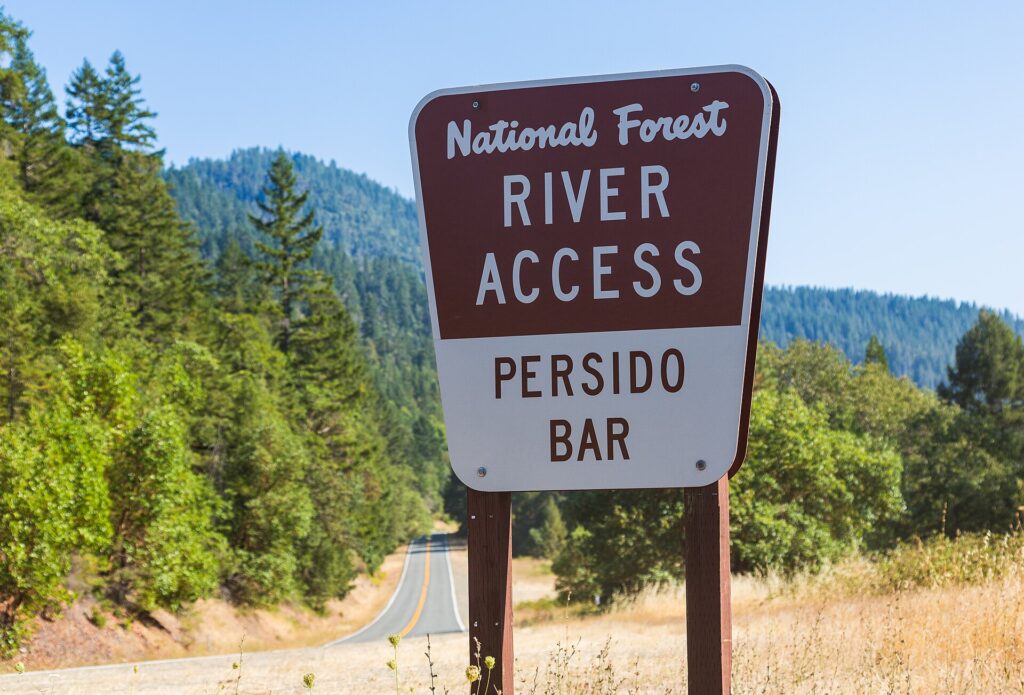

The footage was shot on the east bank of Bluff Creek, a tributary of the Klamath River in Six Rivers National Forest, about 25 miles of logging road northwest of the town of Orleans. Patterson used a 16 mm Cine-Kodak K-100 camera he had rented in Yakima, Washington, loaded with color film.
The reel is just under 24 feet long and holds 954 frames. Played at 16 frames a second it runs a little under a minute. In it, a large, dark, upright figure with heavy shoulders and long arms walks across a sandbar with an unhurried stride. About a third of the way through, at what researchers call frame 352, it turns its head and upper body to look back at the camera. That single frame is one of the most reproduced images in cryptozoology, and the subject has been nicknamed “Patty.”
The Men Behind the Camera
Roger Patterson was a former rodeo rider from Washington State who had already written a self-published book about Bigfoot in 1966 and had been planning a documentary on the creature. He died of Hodgkin’s lymphoma in 1972, still insisting the film was genuine.
Bob Gimlin was a friend and fellow horseman who rode with Patterson that day. For decades he said little about the film, then began giving interviews in the 2000s. He has always denied any part in a hoax.
The Debate
The film has been studied frame by frame for decades, and almost every detail is contested.
Film speed. Patterson never recorded the setting on his camera, and the speed matters: at 16 frames a second the walk looks like a heavy animal’s, while at 24 it looks more like a person’s. Anthropologist Grover Krantz argued for 18 frames a second, a figure many researchers still use.
The body. Supporters point to what they see as muscle moving under the hair, a flexible foot, and a gait that is hard for a person in a suit to copy. Idaho State anthropologist Jeff Meldrum and creature-effects artist Bill Munns, whose 2014 book When Roger Met Patty runs to nearly 500 pages, both argue the subject is not a man in a costume. Other scientists who have studied the footage conclude it simply cannot be judged with confidence.
The suit. In 2002, North Carolina costume maker Philip Morris said he had sold Patterson a gorilla suit by mail order in 1967. Bob Heironimus, a Yakima man who knew Patterson, has said since 1999 that he was the one inside it, and Greg Long laid out his story in the 2004 book The Making of Bigfoot. Neither produced the suit.
The 50th Anniversary
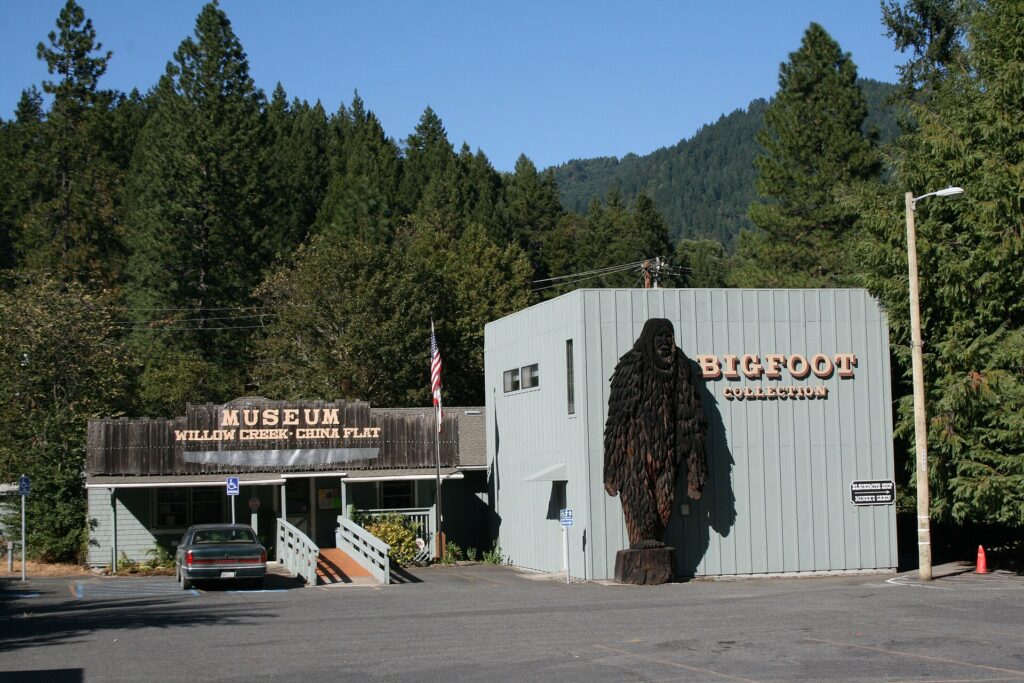

On October 20 and 21, 2017, Bigfoot enthusiasts gathered in Willow Creek and Eureka, California, for a Patterson-Gimlin Film 50th Anniversary Conference, with Bob Gimlin billed as a guest of honor. Willow Creek, which calls itself the gateway to Bigfoot country, also has the Bigfoot museum and a giant carved statue of the creature. The anniversary drew national press, including CNET, as a sign of how firmly the film is still fixed in American folklore.
The 2026 Documentary
In 2026 the argument took its biggest turn in decades. The documentary Capturing Bigfoot, directed by Marq Evans, premiered at South by Southwest in March and was released online on October 20, 2026, the film’s 59th anniversary.
Its centerpiece is a 40-second reel found in a locked safe after the death of Norm Johnson, a Boeing film-lab worker connected to Patterson through his brother. The film says the reel was shot and developed in 1966, a year before Bluff Creek, and shows a thinner Bigfoot figure walking through similar woods, which the filmmakers present as a rehearsal. Patterson’s son Clint also appears, saying his mother told him years ago that the sighting was staged.
Not everyone accepts it. Matt Moneymaker of the Bigfoot Field Researchers Organization questioned how anyone can trust newly surfaced footage in the age of AI, and the filmmakers say they used no AI-generated material and are fully confident in the reel. As with every earlier claim, the argument now turns on evidence that can be tested: the age of the film stock, the lab records, and whether the 1966 reel truly matches what was filmed at Bluff Creek.
Why the Film Still Matters
Whatever walked across that sandbar, the Patterson-Gimlin film created the modern image of Bigfoot: the dark hair, the heavy stride, the backward glance. Nearly every Bigfoot photo, statue and cartoon since has been measured against it. It endures because it sits exactly at the edge of what a camera can prove, long enough and clear enough to study for a lifetime, and never quite clear enough to end the argument.
The Cryptids Deck is coming
Bigfoot, the Loch Ness Monster, Mothman, the Chupacabra and more, illustrated on a new deck of playing cards from Gent Supply Co. Expected around April 2027. Join the waitlist and we’ll email you when it launches.
By signing up you agree to receive emails from Gent Supply Co. about the Cryptids deck and our other playing card releases. We’ll send a confirmation email first. Unsubscribe at any time.
Recent Comments